

IMO
There are numerous organizations with the abbreviation "IMO," but assuming you are referring to the International Maritime Organization (IMO), here's a detailed overview:
International Maritime Organization (IMO)
The International Maritime Organization, often abbreviated as IMO, is a specialized agency of the United Nations responsible for regulating shipping. The IMO was established in 1948 and came into full force in 1959. Its headquarters are located in London, United Kingdom.
Mission and Objectives
The IMO's primary mission is to create a regulatory framework for the shipping industry that is fair, effective, universally adopted, and universally implemented. The organization focuses on several key objectives:
- Safety and Security: Establishing international safety regulations to ensure the security of life at sea.
- Environmental Protection: Setting standards to minimize the environmental impact of shipping activities.
- Legal Matters: Developing international maritime law to ensure efficient and equitable shipping practices.
- Technical Cooperation: Providing technical assistance and capacity-building programs, especially for developing countries.
- Efficiency and Facilitation: Streamlining procedures for international shipping to make maritime transport more efficient and cost-effective.
Key Conventions and Regulations
The IMO is known for several important international treaties and conventions, such as:
- SOLAS (Safety of Life at Sea): One of the most important treaties focusing on ship safety.
- MARPOL (Marine Pollution): International regulations aimed at preventing pollution from ships.
- COLREGs (Collision Regulations): Regulations for preventing collisions at sea.
- STCW (Standards of Training, Certification, and Watchkeeping for Seafarers): Setting qualification standards for seafarers.
- IMDG Code (International Maritime Dangerous Goods Code): Regulations for the safe transport of hazardous materials and dangerous goods.
Structure and Governance
The IMO consists of an Assembly, a Council, and five main Committees:
- Assembly: The highest governing body, composed of all Member States, which meets every two years.
- Council: Acts as the executive organ and is responsible for ensuring the functioning of the IMO.
- Committees:
- Maritime Safety Committee (MSC)
- Marine Environment Protection Committee (MEPC)
- Legal Committee
- Technical Cooperation Committee
- Facilitation Committee
Membership
The IMO has a wide membership, with around 174 Member States and three Associate Members as of 2023. These members are primarily countries with maritime interests.
Achievements and Impact
The IMO has made significant contributions to maritime safety and environmental protection:
- Reduction in Maritime Accidents: Implementation of rigorous safety standards has led to a marked decrease in maritime accidents.
- Mitigating Environmental Impact: Introduction of cleaner fuel regulations and restrictions on emissions has reduced the environmental impact of the maritime industry.
- Global Standards: The establishment of universally recognized standards has leveled the playing field, fostering fair competition and consistency across the global maritime industry.
If you meant another organization by "IMO company," please provide more context, and I’d be happy to share information accordingly.
- Phone: + 44 (0)20 7735 7611
- Web: https://www.imo.org/
IMO News
Hapag-Lloyd to Accept IMO Cargo at Algiers Port
Further to our previous communication and CustomerInfo of April 11, 2014 we would like to inform you that with immediate effect, Hapag-Lloyd is in a position to…
IMO adopts Polar Code Safety Requirements
On November 21, the International Maritime Organization, or IMO, finalized the Polar Code and adopted amendments to the International Convention for the Safety of Life at Sea…
BIMCO wants IMO to Cut Red Tape
BIMCO has today announced its support for a report identifying ways to reduce red tape for shipping which will be presented to the International Maritime Organization (IMO) next week in London.
EU Regs on Ship CO2 Reporting Complicates IMO Agreement

ICS Concerned that EU will Preempt IMO CO2 Negotiations. The global trade association for shipowners – the International Chamber of Shipping (ICS) – is disappointed and concerned that the European Union is about to pre-empt negotiations taking place at the International Maritime Organization (IMO) on the collection of data on CO2 emissions from ships, by unilaterally adopting a regional Regulation which will apply to non-EU flag vessels, as well as ships registered in the EU.
Interferry Welcomes IMO Decision on LNG Fuel Tank Placement
Interferry has welcomed a decision at last week’s IMO Maritime Safety Committee meeting (MSC94) setting out rules for the location of fuel tanks on LNG-powered ships…
Environmental Groups: IMO Polar Code Too Weak
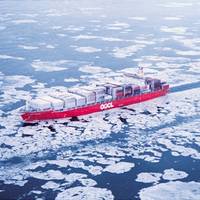
The International Maritime Organization (IMO) today adopted the Polar Code aimed at regulating shipping in Polar Regions. Several environmental groups have criticized the measures for not going far enough to protect the Arctic and Antarctic environments, arguing that while the new code is a positive step forward, it is insufficient to properly protect Polar environments from the anticipated increased levels of shipping activity.
IMO Steps Up Safety in Polar Waters
United Nations’ International Maritime Organization (IMO) has adopted global, binding regulations to enhance safety of navigation in polar waters. After several years’ intense negotiations…
IMO Type Approval for BallastMaster ultraV 500

GEA Westfalia Separator Group was awarded IMO Type Approval by the Federal Maritime and Hydrographic Agency (BSH) for the BallastMaster ultraV 500. The document was handed over by representatives of the BSH in an official capacity to the project managers of the ballast water system at SMM 2014 in Hamburg. The 500m³ installation is a scale-up of the 250m³ variant which had already been certified with the IMO Type Approval in December 2011.
Denmark Nominates Nordseth for IMO Sec. Gen.'s Post
Denmark nominates Director General of the Danish Maritime Authority Andreas Nordseth for the post as Secretary General of United Nations’ International Maritime Organization (IMO).
Interferry Applauds IMO Consideration of BWTS Exemption

Interferry has praised a decision made at last week’s meeting of the IMO Marine Environment Protection Committee (MEPC) that could exempt certain ferry operators from fitting equipment required by the impending Ballast Water Management Convention to reduce the spread of invasive species. In a joint submission with Denmark, the trade association argued that ballast water management systems were irrelevant for ships continuously operating in the same body of water, such as between the U.K.
INTERTANKO Welcomes IMO Bunker Decision
The International Maritime Organization (IMO) has agreed to consider introducing measures to improve controls of bunkers delivered to ships. After six submissions to the IMO over four years…
IMO to Review BWM System Type Approval Guidelines
As proposed by INTERTANKO and its industry partners, the IMO has agreed to commence a review of the ballast water management system (BWMS) type approval guidelines…
ICS Welcomes IMO Progress on BW Issues

Governments attending the International Maritime Organization (IMO) Marine Environment Protection Committee (MEPC) this week have made real progress towards agreeing solutions to major issues that have previously impeded ratification of the IMO Ballast Water Management Convention, says the International Chamber of Shipping (ICS), the global trade association for ship operators. Speaking at IMO headquarters…
Denmark Lobbies for IMO Top Job
Denmark and its maritime industry are lobbying to get the top position at the International Maritime Organization, a United Nations body that wields great influence…
IMO Urged to Provide Access to Efficiency Data

Shipping Fuel Transparency Will Lower Emissions and Cut Costs. NGOs call on shipping industry regulator to drive down costs, trigger improved fuel efficiency and reduce ship GHG emissions through efficiency data transparency. Transport & Environment, Seas at Risk and Carbon War Room are urging the International Maritime Organisation (IMO) not to withhold data on ship efficiency and fuel consumption.
ICS Lobbies on BWT Issues on Eve of IMO Meeting
The International Chamber of Shipping (ICS) and its member national shipowners’ associations are engaged in a flurry of lobbying on the eve of a crucial meeting…
IMO Takes Step Towards Electronic Certificates
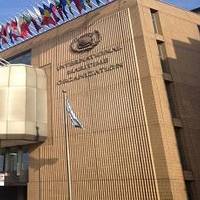
In the future, the IMO member States should accept the use of electronic certificates. This is the request of the Facilitation Committee (FAL) and, hence, the road is paved for less paperwork, nuisance and delays for the shipping industry. In the future, it must be easier to use electronic certificates. This was decided by the Facilitation Committee of United Nations’ International Maritime Organization…
IMO Takes Important Step Towards Electronic Certificates
In the future, the IMO member States should accept the use of electronic certificates. This is the request of the Facilitation Committee (FAL) and, hence, the road is paved for less paperwork…
Ship Safety: IMO Committee Agree Draft IGF Code
IMO informs that the draft International Code of Safety for Ships using Gases or other Low flashpoint Fuels (IGF Code), along with proposed amendments to make the Code mandatory under SOLAS…
ICS to Plead Shipowners' Eco-Concerns to IMO Member States
In advance of a critical intergovernmental meeting next month at the UN International Maritime Organization (IMO), the International Chamber of Shipping (ICS) has…