

IMO Challenged Over Livestock Carrier Regulations

A global network of 36 animal welfare and protection organizations around the world has issued an urgent call to the IMO to introduce binding international regulations for livestock carriers, warning that the ageing fleet poses serious and escalating risks to human life, animal welfare, public health, and the marine environment.In an open letter sent to the IMO Secretary-General, the organizations outlined systemic safety failures across the global live export shipping fleet, which is now the oldest of any ocean shipping sector…
Spiridon II: Call for IMO Investigation
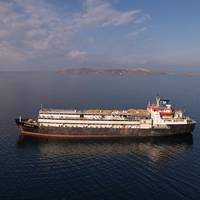
The livestock carrier Spiridon II has unloaded cattle in the Libyan city of Benghazi after being stranded off the Turkish coast for more than a month after a month-long voyage from Uruguay with nearly 3,000 cattle on board.The Spiridon II is now back at sea.It is unclear what happened to the dead animals and sewage onboard. Dozens of animals had already died, and many calves had been born, lost, or perished. The dead animals and excrement cannot legally be disposed of in the Mediterranean Sea due to MARPOL regulations.
Rejected Livestock
The recent rejection of around 2,900 dairy cattle on the Spiridon II raises animal welfare and pollution concerns when, after a long sea voyage, the laden vessel has again had to return to sea.The 52-year-old livestock carrier has left Turkey after its cargo was rejected by local authorities. Court transcripts translated by Animal Welfare Foundation indicate that 58 cows died in transit to Turkey, 140 cows had miscarriages in transit, 50 newborn calves were present on board, but another 90 are unaccounted for.Having departed from Montevideo…
Crew and Cattle Stranded Off Turkey
The 52-year-old livestock carrier Spiridon II remains in quarantine off Turkey with around 20 crew and 2,853 cows onboard.Having departed from Montevideo (Uruguay) bound for Turkey on September 19 with 2,901 heifers, some of which may be pregnant, the Spiridon II is, over 50 days later, still unable to deliver the animals to shore.Veterinary authorities are refusing to allow them to disembark due to a controversy over ear tags that guarantee, among other things, the exact origin…
Witherbys to Introduce New Oceanographic Research Vessel from 2026
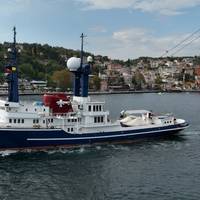
Maritime publishing and digital training group Witherbys has unveiled plans to introduce a new oceanographic research vessel, the MV Sea Ranger, from 2026 to support its technical development, real-world navigational studies and maritime training programs.The MV Sea Ranger will support Witherbys’ mission to enhance maritime knowledge and safety through research directly linked to shipboard operations.It will strengthen the delivery of computer-based training programs, both via Witherbys’ eBook Reader Witherby Connect…
Second Edition of Ship to Ship Transfer Guide Published
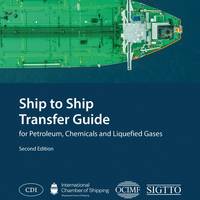
The Chemical Distribution Institute (CDI), International Chamber of Shipping (ICS), Oil Companies International Marine Forum (OCIMF) and the Society of International Gas Tanker and Terminal Operators (SIGTTO) have released the second edition of ‘Ship to Ship Transfer Guide for Petroleum, Chemicals and Liquefied Gases’.Originally published by OCIMF in 1975, the STS Transfer Guide was consolidated in 2013 through the combined expertise of CDI, ICS, OCIMF and SIGTTO. Recognized globally by the tanker industry and IMO Member States as the definitive reference for safe and effective STS operations…
Seven Shipping Associations Call for IMO Adoption of NZF
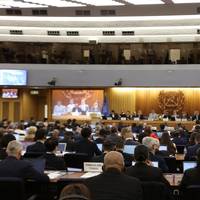
Heads of seven shipping associations have called for the IMO to adopt its Net-Zero Framework (NZF) at the crucial vote in October. Anything else would be a major setback for the green transition and risk leaving the industry with a complicated patchwork of regional climate regulations.Next week the 176 members of the IMO will convene in London to formally adopt the historic agreement on binding climate regulation of the shipping industry agreed upon in April.Danish Shipping along with six other shipping associations calls for the adoption of the IMO Net-Zero Framework.
World Maritime Day 2025 Focuses on Marine Environment
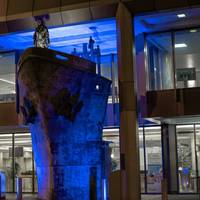
The ocean takes center stage on World Maritime Day 2025, as the IMO celebrates how the industry is stepping up action to protect the ocean.This year’s World Maritime Day, observed globally on 25 September, focuses on the sector’s impact on the marine environment, and what it can do to reduce pollution, curb greenhouse gas emissions and prevent biodiversity loss.Secretary-General of the IMO Arsenio Dominguez said: “IMO has, for many decades, worked to strike the right balance to ensure that the shipping industry is not the problem but the solution.
Seatrium Secures ABS Backing for Deepwater FPSO Design
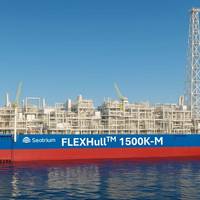
Seatrium has received Approval in Principle (AiP) from the American Bureau of Shipping (ABS) for its proprietary FLEXHull 1500K-M floating production storage and offloading (FPSO) design.The AiP underscores Seatrium’s ability to deliver advanced solutions for deepwater oil and gas production, the company said.The FLEXHull 1500K-M is designed to handle topside loads of up to 80,000 metric tons, with a hull that can be adjusted for different requirements. It also features expanded tank capacity…
Ship Fuel Quality Holds Steady, says LR Report
LR’s latest FOBAS Fuel Insight report highlights broadly steady fuel quality with particular issues around high sediments and chemical contamination, and an increased use of biofuel blends with developments in energy-content measurement.Global bunker fuel quality remained resilient in the first half of 2025 despite growing fuel diversity and tightening environmental regulation, according to Lloyd’s Register’s latest FOBAS Fuel Insight report. The findings highlight how improved testing…
The Five Ws (and How) of the IMO Polar Code
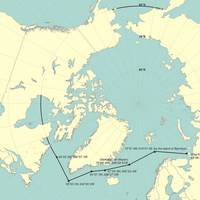
Since coming into force, the IMO Polar Code has had a positive effect on maritime operations in polar waters, write Dan Oldford and Ed Moakler, ABS HETC, St. John’s, Newfoundland and Labrador.What is the Polar Code, When and Why did it come into force?Polar regions have many unique hazards compared to warmer waters around the world. Since the earliest explorers sought to explore the Arctic and Antarctic by ship, many vessels have been lost due to sea ice, cold air temperatures and ice accretion.Prior to the Polar Code coming into force there were no international regulations…
IMO Calls for Action After UN Ocean Conference
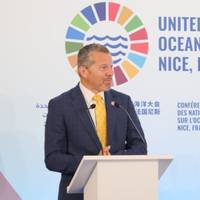
The Secretary-General of the International Maritime Organization (IMO), Arsenio Dominguez has applauded the important commitments made at the United Nations Ocean Conference (9-13 June) in Nice, France, while urging countries to deliver on these promises as soon as possible.Dominguez said: “Commitments are a necessary first step, but they are not the finish line. We must now move beyond the statements and turn those words into real, measurable action. That will take all stakeholders coming together…
Are Workboats Really Going Green?
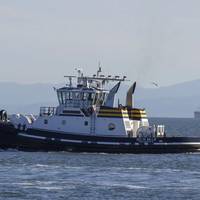
Tugboat and towboat owners across the nation eye fuel efficiency and emission reduction technologies and techniques in advance of increasingly stringent regulations.he first half of 2025 has seen a great deal of attention on emissions from vessels, with an eye towards their continued reductions in the coming years. Mid-April saw the International Maritime Organization (IMO)’s much anticipated Maritime Environment Protection Committee’s MEPC 83 meeting participants lay out plans for reduced greenhouse gas emissions in the coming years…
Biofuel Blending: Whitchampion Bunker Tanker Earns Unique Certification
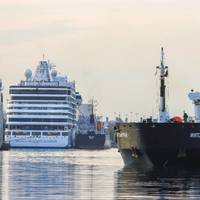
UK-based bunker operator John H. Whitaker (Tankers) Limited secured chemical certification from Lloyd’s Register (LR) on behalf of the Isle of Man Flag Administration for its tanker Whitchampion to load, carry and blend Fatty Acid Methyl Esters (FAME B100) onboard under IBC Code and MARPOL Annex II regulations.The certification allows Whitchampion to perform onboard blending of biofuels with petroleum distillates and residual fuel oils. The operation is authorized within UK coastal…
Government of Panama Rejects Claims About Enforcing Iran’s Sanctions Efforts

The Government of Panama rejects the claims made by Mark D. Wallace, CEO of United Against Nuclear Iran (UANI) in recent publications circulated through the media and electronic mail worldwide. Panama, through its Panama Maritime Authority (referred to by its Spanish acronym AMP), the entity in charge of the Panama Ship Registry, as the governing body of the Panamanian maritime sector, has de-flagged more than 650 ships from its registry since 2019 in compliance with the United…
New Lloyd’s Register Report Outlines Upcoming Regulatory Changes
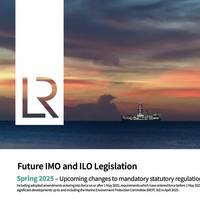
A new Lloyd's Register report outlines the upcoming changes to mandatory statutory regulations and instruments. A comprehensive suite of new International Maritime Organization (IMO) and International Labour Organization (ILO) regulations come into force over the next few months, reshaping environmental standards, safety protocols, and seafarer welfare. The changes outlined in Lloyd’s Register’s “Future IMO and ILO Legislation – Spring 2025” report highlight upcoming updates to mandatory statutory regulations and instruments, with effective dates on or after May 1, 2025.
IMO: New Air Pollution Limits Begin May 1 for Ships in the Mediterranean

The Mediterranean Sea officially became an Emission Control Area for Sulphur Oxides and Particulate Matter (Med SOx ECA) under MARPOL Annex VI on May 1, 2025. The sulphur content in fuel oil for ships operating in the area is now limited to 0.1%, reducing air pollution and delivering benefits to both human health and the marine environment. Ships operating in Emission Control Areas for Sulphur Oxides and Particulate Matter, such as the Mediterranean Sea, are subject to strict mandatory measures to prevent, reduce and control air pollution.
Outcomes of the Marine Environment Protection Committee (MEPC 83)
The Marine Environment Protection Committee (MEPC) met for its 83rd session in person at IMO Headquarters in London from April 7-11, 2025. The meeting was chaired by Dr. Harry Conway (Liberia), with Mr. Hanqiang Tan (Singapore) as Vice-Chair.Highlights included:Tackling climate changeThe Committee finalized and approved the draft legal text for the "IMO Net-Zero Framework," to be included as a new chapter in Annex VI to the International Convention for the Prevention of Pollution…
Opinion: MarinFloc Co-Founder Calls for Essential Maritime Waste-Management Training
In my 30 years in the industry, I have witnessed firsthand how waste handling on ships remains one of the most underestimated challenges in maritime operations. The problem is not a lack of care—officers and crew members do not want to pollute the oceans. We have previously written about regulatory shortfalls, substandard products, and poor onboard culture as contributing factors to the waste management issues we see today. However, at the core of all these problems is a fundamental lack of knowledge and training.
IMO Approves Net-Zero Regulations for Global Shipping
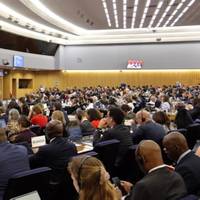
The International Maritime Organization (IMO) has achieved another step towards establishing a legally binding framework to reduce greenhouse gas (GHG) emissions from ships globally, aiming for net-zero emissions by or around, i.e close to 2050. The IMO Net-zero Framework is the first in the world to combine mandatory emissions limits and GHG pricing across an entire industry sector. Approved by the Marine Environment Protection Committee during its 83rd session (MEPC 83) from April 7-11, 2025, the measures include a new fuel standard for ships and a global pricing mechanism for emissions.
MEPC 83 Set to Tackle Mid-Term Measures on Emissions
The Marine Environment Protection Committee (MEPC) will meet for its 83rd session from April 7 to 11 April, and efforts to reduce GHG emissions from ships will be top on the agenda.Tackling climate change - Reduction of GHG emissions from shipsThe 2023 IMO GHG Strategy outlines a set of “mid-term measures” aimed at reducing greenhouse gas emissions from international shipping. These measures should consist of:• a technical element: a goal-based marine fuel standard designed to gradually lower the GHG intensity of marine fuels…
Evac Group: Dehydro Meets Waste Management Needs of Smaller Vessels

Evac Group, a leader in sustainability technologies and solutions, has launched Dehydro, an onboard waste management system designed to meet the specific needs of smaller vessels. Traditional onboard waste systems typically require high volumes of wet waste to be cost-effective, which makes them impractical for smaller vessels. The Dehydro system, using dehydration technology, makes onboard waste treatment viable for smaller ships, reducing the need for overboard discharge or costly offloading to land-based facilities.
ICS and CMI Renew Call for Treaty Ratification

The International Chamber of Shipping (ICS) and the Comité Maritime International (CMI) have launched an updated campaign for promoting maritime treaty ratification as there is a long-standing concern that many governments are not ratifying important international conventions despite their adoption at IMO and other regulatory fora.The campaign highlights the international maritime Conventions which ICS and CMI believe are significantly important for governments to ratify as a matter of urgency.