
Due Diligence Required as More Biofuel Feedstocks Used

NorthStandard has published a new white paper focusing on the accelerating adoption of biofuels in commercial shipping. ‘Biofuels – Driving the green transition’ brings together insights from NorthStandard, supplier World Fuel and leading testing agency Veritas Petroleum Services (VPS), in a unique discussion document outlining biofuel uptake, potential issues and loss prevention measures. Many owner-operators who seek a drop-in solution to drive maritime decarbonization choose biofuel blends.
EU Unveils Sustainable Transport Investment Plan

The European Commission has adopted its communication on the Sustainable Transport Investment Plan (STIP), setting out a roadmap to rapidly accelerate the energy transition of aviation and waterborne transport sectors.To meet the fuel targets set out in the ReFuelEU Aviation and FuelEU Maritime Regulations, a significant volume of around 20 million tonnes of sustainable alternative fuels (13.2 Mt of biofuels and 6.8 Mt of e-fuels) will be needed by 2035. This calls for substantial investments from the market…
ABS and Siemens to Advance Digitalization in Shipbuilding
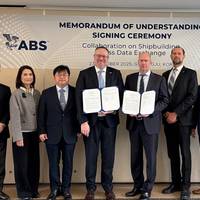
ABS and Siemens Digital Industries Software (DISW) have signed a memorandum of understanding to accelerate the digital transformation of maritime classification processes across ship design and construction.The collaboration will also advance product lifecycle management (PLM) technology to enhance efficiency, data integrity and regulatory compliance throughout the vessel life cycle.The MoU establishes a framework for both organizations to collaborate on projects such as class rule application during 3D design…
Ferry Owners Face 'Double Taxation' from EU, Interferry Warns
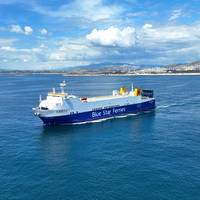
Interferry called on the European Commission to immediately harmonize its unilateral EU ETS / FuelEU Maritime regulations with the recently agreed IMO Net-Zero Framework, warning that failure to align Greenhouse Gas regulations will lead to double payment for emissions."We cannot have a situation where operators are paying twice for the same emissions. The European Commission pledged to align its rules once a strong global framework was established at the IMO," said Johan Roos, Director of Regulatory Affairs at Interferry. "That framework is now in place.
ITF Backs US Investigation into Flags of Convenience, Calls for Industry-Wide Accountability
The International Transport Workers’ Federation (ITF) is backing the US Federal Maritime Commission’s (FMC) domestic investigation into vessel flagging laws, including the long-abused practice of ‘Flags of Convenience’ (FOCs).The FMC announced its probe last week, citing serious concerns that states operating FOCs are enabling a “race to the bottom” in global maritime regulations."The FMC is absolutely right in its assessment of Flags of Convenience and the permissive environments they create for unscrupulous shipowners and operators…
Experience Custom Yacht Signs and Designs Tailored to Perfection!
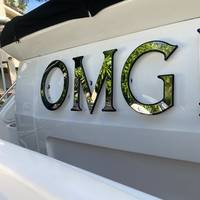
YACHT SIGNSAt Yacht Signs, we excel in creating stunning illuminated yacht names and logos, durable stainless steel yacht lettering, and cutting-edge LED and fiber optic solutions. Our comprehensive services also include in-house design and manufacturing of exquisite backlit and custom yacht signs tailored specifically to your vessel.Yacht signs play a critical role in personalizing and enhancing the style of any luxury yacht. These tailor-made nameplates, typically displayed on the transom, not only highlight the yacht's name but also reflect the owner's unique taste and branding vision.
Stena Bulk to Register Up to Five Suezmax Vessels Under Swedish Flag

Stena Bulk has confirmed its intention to register up to five of its Suezmax vessels under the Swedish flag. A Suezmax tanker is one of the largest types of tankers and is approximately 275 meters long with a gross tonnage of 81,000 tonnes. Up to five of these vessels will be the largest ships under the Swedish flag.In recent years, Sweden has made progress to improve its competitiveness as a shipping nation. Reforms such as the removal of stamp duty on ship registration, improvements to the Swedish Ship Register…
Union Maritime Launches Wind-Assisted Ship With Norsepower Rotor Sails™
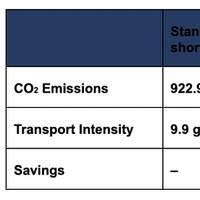
Union Maritime, a UK shipowner, has launched its first wind-assisted vessel, Buran, fitted with Norsepower Rotor Sails™ designed to harness wind energy and enhance fuel efficiency.Its launch marks a major milestone as the company seeks to expand its fleet with 34 wind-assisted ships, including six chemical tankers equipped with Norsepower Rotor Sails™. Once complete, Union Maritime will operate the largest fleet using this technology globally, with the rotor sails expected to generate up to 10% of each vessel’s annual energy needs from wind.
Evac Group: Dehydro Meets Waste Management Needs of Smaller Vessels

Evac Group, a leader in sustainability technologies and solutions, has launched Dehydro, an onboard waste management system designed to meet the specific needs of smaller vessels. Traditional onboard waste systems typically require high volumes of wet waste to be cost-effective, which makes them impractical for smaller vessels. The Dehydro system, using dehydration technology, makes onboard waste treatment viable for smaller ships, reducing the need for overboard discharge or costly offloading to land-based facilities.
ABS Holds Inaugural South America Regional Committee Meeting
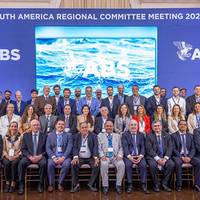
Maritime and offshore energy leaders from Brazil, Argentina, Chile and throughout South America came together for the first meeting of the ABS South America Regional Committee.“ABS has a long, proud history of many decades serving clients in South America, and we are excited to bring together a committee of esteemed colleagues to exchange ideas and engage in constructive discussions to support innovative solutions and forward progress in the maritime and offshore industries,” said Vassilios Kroustallis…
Methane Slip Cut in Final VCR Tech Tests

WinGD reports that it completed shop tests of its variable compression ratio (VCR) technology, and the company claims that methane reductions from new X-DF engines with VCR technology deliver similar ship greenhouse gas (GHG) emissions to high-pressure dual-fuel technologies, while delivering a total system cost and fuel cost advantage for several vessel applications.The VCR shop test was completed at Mitsui E&S DU (MESDU) facilities in Japan, where the first X‑DF2.0 engines with VCR are being built for bulk carriers owned by NYK Lines.
Support for Jones Act, Concern about China Voiced at Maritime Infrastructure Hearing

US Coast Guard and Maritime Transportation Subcommittee Chairman Mike Ezell (R-MS) addressed a hearing titled “America Builds: Maritime Infrastructure” on Wednesday saying: “It is clearly critical that we must build a safer and more efficient system.”The new chairman, for the 119th Congress, said the Jones Act is quite literally the bedrock and foundation of the nation’s shipbuilding industrial base because it helps to maintain a pool of qualified American mariners that the US relies on to transport goods and its military…
SHIPS for America Act rolled out on the Hill
The bipartisan, bicameral bill will fuel U.S. economy, strengthen national security by responding to China’s threat over the oceans. Currently, the number of U.S.-flagged vessels in international commerce is 80; China has 5,500.Today, Senator Mark Kelly (D-AZ), Senator Todd Young (R-IN), Representative John Garamendi (D-CA-8), and Representative Trent Kelly (R-MS-1) introduced the Shipbuilding and Harbor Infrastructure for Prosperity and Security (SHIPS) for America Act, comprehensive legislation to revitalize the United States shipbuilding and commercial maritime industries. After decades of neglect, the United States has a weakened shipbuilding capacity, a declining commercial shipping fleet that is dwarfed by China, and a diminished ability to supply the U.S. military during wartime.
Liquified Bio-Methane Bunkered in Rotterdam
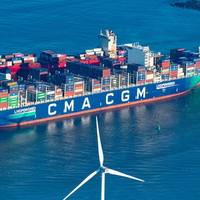
The Rotterdam-Singapore Green and Digital Shipping Corridor (GDSC) partners have conducted a successful pilot for the bunkering of mass-balanced liquefied bio-methane (LBM) at the Port of Rotterdam.A total of 100 tonnes of mass-balanced LBM was supplied by Shell to CMA CGM’s LNG-powered containership CMA CGM Tivoli.The LBM was produced from waste-based feedstock. Shell issued a Proof of Sustainability certificate for the LBM fuel, verifying its compliance with European Union regulations.
Offshore: Feedering for the Win(d)
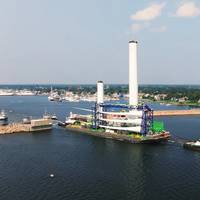
With clean energy projects maturing in U.S. waters, the nation’s offshore wind industry is poised to grow substantially, requiring a robust industrial base. A feedering model using domestic tugs and barges to transport turbines to offshore wind sites, is positioned at the heart of this emerging growth.Currently, the entire global fleet of wind turbine installation vessels (WTIV)—except for Dominion Energy’s Charybdis currently under construction at the Seatrium AmFELS yard in Brownsville, Texas—is flagged, owned and operated outside of the U.S.
AST Networks Expands into NavCom Systems

AST Networks has expanded into the navigation and communication (NavCom) system sector.The move reflects their commitment to providing comprehensive communication solutions that address the evolving needs of the marine industry. By integrating NavCom technologies with its existing suite of maritime IT solutions, AST Networks aims to offer unmatched operational efficiency, safety and compliance for maritime operators worldwide. NavCom systems provide real-time data and alerts, helping prevent collisions, grounding, and other hazards.
Seeing the Ship as a System Changes Everything

Shipping must engage with the decarbonization realities that lie ahead by changing the way it crafts maritime legislation to reflect its place in the interconnected, interdependent world economy, says Eero Lehtovaara, Head of Regulatory & Public Affairs, ABB Marine & Ports.ABB Marine & Ports Head of Regulatory & Public Affairs, Eero Lehtovaara has carved out an unusual - and possibly unique - role in the maritime industry over recent years, as a ‘stakeholder’ simultaneously mindful of the perspectives of owners…
OPINION: Seeing the Ship as a System Changes Everything

Shipping must engage with the decarbonization realities that lie ahead by changing the way it crafts maritime legislation to reflect its place in the interconnected, interdependent world economy, says Eero Lehtovaara, ABB Marine & Ports.ABB Marine & Ports Head of Regulatory & Public Affairs, Eero Lehtovaara has carved out an unusual - and possibly unique - role in the maritime industry over recent years, as a ‘stakeholder’ simultaneously mindful of the perspectives of owners, seafarers…
ClassNK Offers Insights on New EU Fuel Rules
ClassNK recently released FAQs on the FuelEU Maritime (1st Edition), an overview and necessary preparation for FuelEU Maritime, regulations newly introduced by the European Union (EU) to promote the decarbonization of fuels used on board ships.The EU has set a goal of reducing greenhouse gas (GHG) emissions by at least 55% by 2030, compared to the 1990 levels, with the aim of achieving net zero emissions by 2050.As part of a comprehensive climate policy package "Fit for 55" for achieving this goal…
Op/Ed: Technology Manufacturers’ Input More Critical than ever for Effective Maritime Regulations
Next year marks a crucial milestone for the International Maritime Organization’s (IMO) Ballast Water Management (BWM) Convention, with all ships required to meet the D2 standard for ballast water management by 8 September 2024. D2 specifies the maximum number of viable organisms allowed to be discharged. In most cases, it requires the installation of a ballast water management system (BWMS) on board the vessel.2024 will be a pivotal moment for the ballast water market and while it is true that the retrofit market will diminish and leave behind only a small newbuild market…
Training Tips for Ships: Empowering Seafarers with AI

In the maritime industry, seafarer safety and professionalism are critical to ensuring smooth operations and minimizing risks. As technical advancements continue to reshape every industry including ours, large language models like ChatGPT and Bard have the potential to directly assist seafarers in performing their duties more safely and professionally. So, how can a seafarer leverage these tools to enhance their onboard performance? Let’s look at some examples.One example is in providing instant, human-readable access to regulations and guidelines.
ICEYE to Deliver SAR Imagery to EMSA

ICEYE announced the start of a multi-year framework contract with the European Maritime Safety Agency (EMSA) to support their efforts in managing various aspects of maritime operations with Synthetic Aperture Radar (SAR) data.Among its many missions, EMSA, a European Union agency, provides technical expertise and operational assistance in reducing the risk of maritime accidents and assisting in response and recovery from marine pollution from ships and oil installations. The agency…
Berge Named SVP Global Regulatory Affairs at Corvus Energy

Energy storage systems (ESS) supplier Corvus Energy has appointed Kolbjørn Berge as senior vice president global regulatory affairs effective February 1.Previous to joining Corvus Energy, Berge worked for the Norwegian Maritime Authority (NMA), responsible for the decarbonization of shipping. Berge’s focus has been safety and regulations for green solutions and the design of current national and international maritime regulations. He has been involved in numerous projects and a driving force in developing the regulations for the use of liquefied natural gas (LNG)…