

Precision Shaft Alignment: A Sustainable Advantage in Modern Engineering

Sustainability has become a defining priority across industrial and maritime operations. While much of the discussion centers on alternative fuels and emerging technologies, one of the most immediate and cost-effective opportunities to reduce energy consumption and emissions is often overlooked: precision shaft alignment.AME sees firsthand how precision shaft alignment services improve equipment reliability, reduce vibration, and support long-term sustainability across both marine and industrial environments.The Hidden Energy Fee of Shaft MisalignmentMisalignment in rotating equipment…
Vessev Launches the VS-Drive Propulsion System
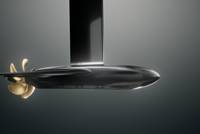
Vessev announced the VS–Drive, a podded propulsion system that stands to redefine electric marine performance. As the latest innovation from Vessev, which designs and builds commercial-grade electric hydrofoiling vessels, the VS–Drive is a submersible motor that combines advanced active cooling with custom direct-drive brushless motors in a modular design. The VS–Drive powers the VS–9, Vessev’s nine-meter, battery-electric hydrofoiling catamaran, which delivers smooth, silent and emissions-free journeys.
Maersk Retrofits Green Technology on Time-Chartered Fleet

In a large-scale program involving 50 different shipowners, A.P. Moller - Maersk is retrofitting around 200 vessels in its time-chartered fleet. The main aim of the program is to reduce the slot cost by improving fuel efficiency and cargo-carrying capacity leading to a decrease in both cost and greenhouse gas emissions.“Our medium- and long-term chartered fleet makes up a significant proportion of our operations as well as of our total fuel consumption. By working closely with our partners…
Maersk Launches Major Retrofit Program for its Time-Chartered Fleet
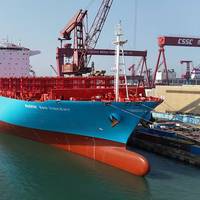
A.P. Moller - Maersk (Maersk), in close collaboration with the owners, is retrofitting around 200 vessels in its time-chartered fleet as part of a large-scale program involving 50 different shipowners.The main aim of the program is to reduce the slot cost by improving fuel efficiency and cargo-carrying capacity leading to a decrease in both cost and greenhouse gas emissions.Maersk has set the target of a 35% absolute reduction in its scope 1 greenhouse gas emissions by 2030 compared to the 2022 baseline year.In total…
You Want to Save the Planet? Change your Ships Light Bulbs, Keep a Clean Hull
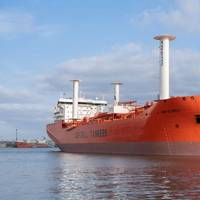
Norwegian shipowners agree: the obsession with new fuels is eliding a valuable discussion of the potential of fuel efficiency. The Aurora-class has enabled Höegh Autoliners to reduce emissions by around 58% per car carried, “before we even use low carbon fuels,” CEO Andreas Enger said. “The debate between energy efficiency and the fuel transition, we consider to be irrelevant and pretty stupid,” he said. “It’s a no-brainer for a shipowner to do everything they can to reduce fuel consumption.“Fuel efficiency itself will yield substantial improvements…
2050: There’s 9,164 Days to Go

This week at MarineLink…A group of people met at the University of Alaska Fairbanks at the end of October to brainstorm a possible new economy for Alaska and a clean energy source for the world: geologic hydrogen.It’s not that new a concept. Villagers in Bourakébougou, Mali, found a source of geologic hydrogen while unplugging an old water well in 2011. Subsequent scientific research confirmed an extensive hydrogen field in the strata below, and it is now used to generate electricity for the village.Other natural hydrogen deposits have been found in Canada…
Energy Saving Devices Counter Pitfalls of Green Fuels

Fleet performance solutions provider Oceanly warns that the green fuels push may lead to increased global emissions.The challenge with scaling green fuels is the high demand for renewable electricity, with current estimates suggesting that the shipping industry would need a substantial share of the world’s renewable electricity production, which is a target that seems unattainable in the short to medium term.Lerche-Tornoe, General Manager at Oceanly said: “While alternative fuels are part of the future, current infrastructure and energy availability isn’t enough to support a full transition.
MOL to Invest in Engine Fuel Efficiency Tech Developer

Mitsui O.S.K. Lines (MOL) has set out plans to invest in Carnot, a start-up company that develops technology for highly efficient engines using heat-resistant materials.Carnot is technology start-up developing ways to dramatically increase engine fuel efficiency, while slashing greenhouse gas (GHG) emissions.Steel and aluminum engines require constant cooling to prevent them from overheating, which reduces performance and increases the risk of engine failure. Therefore, about…
Tech File: Shaft Generators 101 – What are They?
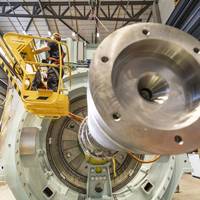
Yaskawa Environmental Energy / The Switch shines a light on how to produce electricity efficiently on ships.A ship is like a floating city that needs electricity to power its operations and amenities on board. So how to generate that electricity while being mobile? That question has been challenging the shipping industry for more than 150 years, when exciting new technologies were being pioneered at the forefront of the new age of electricity. Fast forward to today, and the challenges surrounding the production of electricity on board vessels have been spurred again.
Yaskawa, Corvus Team Up to Develop Short-Circuit Limiter for Maritime Battery Packs

Finland-based power electronics specialist Yaskawa Environmental Energy/The Switch is partnering up with maritime energy storage system (ESS) manufacturer Corvus Energy to continue the development of its smart Battery Short-Circuit Limiter (BSCL) protection device for large-scale battery solutions and advanced DC power distribution.Under the three-year memorandum of understanding (MoU), Corvus Energy becomes the preferred partner for Yaskawa Environmental Energy / The Switch in the ongoing development of the.According to the companies…
NYK VLCC Tateshina Designed to Be 23% More Energy Efficient
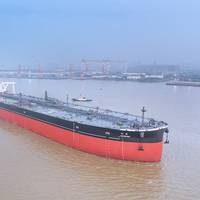
The very large crude oil carrier (VLCC) Tateshina, owned by NYK, was delivered on November 8, 2021, built at Nantong COSCO KHI Engineering Co., Ltd. (NACKS) in China.According to the owner, several enhancements have been incorporated on Tateshina to help improve performance and fuel efficiency and reduce emissions, including a modified bow shape to help reduce wave resistance. This ship is also equipped low-friction paint, high-efficiency large-diameter propellers, and ladder fins that regulate the water flow at the stern and reduce energy loss.
LNG Only Fills Niches in Europe
Although LNG (Liquid Natural Gas) provides a solid supplement to European gas supplies, the EU is and will remain a pipeline market – for good reasons, said Wintershall's new position paper.The report from Germany's largest crude oil and natural gas producer on the importance of liquid gas for Europe said that the liquefaction is highly energy-intensive – the energy consumption corresponds to about 13% of the gas transported.With an energy loss of less than five percent, pipelines are much more energy-efficient. Another argument for pipeline gas lay in its lower costs. Russian pipeline gas, for example, is more competitive and less expensive than LNG from the USA.Since the EU's own gas production is declining, Wintershall welcomes any additional import route.
Hull Vane Retrofit Improves OPV’s Performance
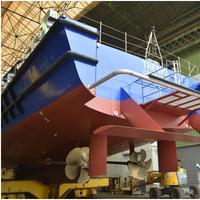
CMN Shipyard in Cherbourg, France, conducted sea trials on the June 13, 2018 on the OPV Thémis from the French Coastguard (Affaires Maritimes).The patrol vessel received a hydrodynamic upgrade at the shipyard by retrofitting the patented Hull Vane, an underwater wing which reduces the ship’s resistance. Comparison with the benchmark sea trials – conducted in January in exactly the same conditions – by CMN’s sea trial team showed a reduction in fuel consumption of 18 percent at 12 knots, 27 percent at 15 knots and 22 percent at 20 knots.
Rolls-Royce Launches Energy Management System

Rolls-Royce has launched the next generation of its Energy Management (EM) System. The system will allow customers to reduce energy usage, fuel consumption and operating costs whilst supporting environmental compliance and providing performance information that enables the ship to comply with SEEMP rules and IMO regulations. The Energy Management System offers customers a more data-driven performance management and decision making approach. This will give an enhanced ability to monitor the performance of an individual vessel or a fleet.
New Plan Pledges Ferry Safety Lead
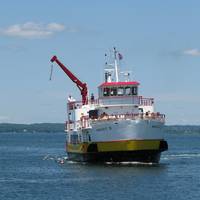
Interferry has unveiled a strategic plan promising to put safety issues at the heart of its work as the voice of the worldwide ferry industry. The pledge came at the global trade association’s 41st annual conference in Manila – a venue chosen to spotlight the challenges of domestic ferry safety in developing nations. According to Interferry, the plan signals its overriding ambition to help lift ferry safety in all parts of the world to the very high standard already in place in North America and Europe, where casualties in recent decades have been extremely rare.
ABB Debuts New Azipod Propulsion Model
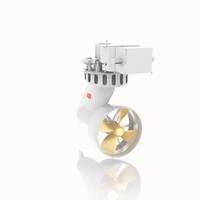
ABB’s newly launched Azipod propulsion unit is said to be up to 10 percent more efficient than previous versions. ABB hopes to expand the appeal of the podded electric propulsion system beyond established markets with its improved efficiency and bollard pull. According to ABB, the new linear flow Azipod XL achieves this jump in efficiency by introducing a nozzle with stator plates, which directs the water flow from the propeller to reduce the turbulence and energy loss and to give the optimum thrust for the vessel.
Russian Military Muscling into the Arctic
Russia has built a giant military base in the far northern Arctic where 150 soldiers can live autonomously for up to 18 months, AFP quotes the Defence Ministry as saying. The building erected on the large island of Alexandra Land, which is part of the Franz Josef Land archipelago, is 97 percent complete. The "Arctic Trefoil" compound, located on 80th parallel north has been built using the latest technologies to prevent energy loss. The construction teams have paved the roads on the remote island and the main building is 97 percent complete, according to the officials. The soldiers can move around the base from one building to another without going outside to face winter temperatures which can reach minus 47 degrees Celsius (-57 degrees Fahrenheit). Fuel can be pumped in from tankers.
Eniram Launches 3 New Energy Savers
Eniram Ltd, a provider of energy management and fuel-saving technology and analytic services to the shipping industry, announced the release of three new products aiming to help save fuel and optimize energy usage on vessels. The company has launched the upgraded speed optimization solution Eniram Speed 3.0, Eniram Performance 3.0 data analytic software, as well as Eniram Fleet Route KPIs designed to support improved routing. Improving on past version Eniram Speed 2.0, the new Eniram Speed 3.0 takes into account factors such as the prevailing sea state, in computing and recommending best speed profile to consume least energy and thus save fuel.
MHI Debuts Non-ozone-depleting Refrigerant
Mitsubishi Heavy Industries, Ltd. (MHI) has developed a new series of centrifugal chillers, dubbed the "ETI-Z Series," adopting a new refrigerant, HFO-1233zd(E), that offers outstanding environmental compatibility. The various models in the new series will be progressively launched starting this September. The ETI-Z series marks the world's first small-size centrifugal chillers to adopt the new refrigerant. The ETI-Z Series carries on the fundamental product concept of the ETI Series: high performance combined with compact size. The ETI series with built-in inverter panel have been widely spread in to the market since the first models were introduced in 2008. Models in the new ETI-Z Series have a cooling capacity within a range of 80 to 700 refrigeration tons*1 (RT).
Next Gen Tankers Delivered to Concordia Maritime
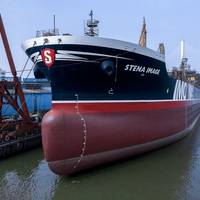
Concordia Maritime’s first chemical and product tanker based on the IMOIIMAX concept, the Stena Image, was delivered from the Chinese shipyard GSI (Guangzhou Shipbuilding International) in Guangzhou. The vessel, a 50,000 dwt MR tanker, is equipped with 18 tanks of the same size, each with a capacity of 3,000 m3, able to load vegetable oils and chemicals as well as petroleum products. The technical design has enabled fuel consumption, when sailing at service speed, to be reduced by 10-20% compared with other vessels of the same size.
IMOIIMAX Stena Impression named in Singapore
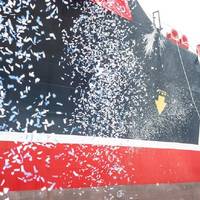
The first of Stena Bulk's $400M, ten-vessel order was named in Singapore yesterday. The Stena Impression is a IMOIIMAX 50,000 DWT MR chemical tanker owned by Stena Bulk and Indonesian's Golden Agri Resources (GAR). The ten ordered vessels will be operated by Stena Weco and will trade within the company’s logistical systems, which will include a fleet of more than 60 tankers. The IMOIIMAX tankers have been designed to transport both vegetable oils and chemicals, as well as clean and dirty petroleum products.
Great Ships of 2014: CSAV Tyndall
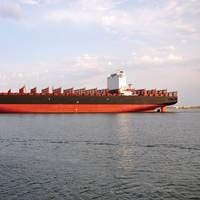
CSAV Tyndall is an 8600 TEU containership built by Daewoo Mangalia Heavy Industries (DMHI) and is part of a series of four containerships delivered to Zodiac Maritime Agencies Ltd. (UK) between 2013 and beginning of 2014. These projects are the biggest containerships ever built in the Black Sea and Mediterranean Sea area. The vessel measures 299.9 x 48.4 x 14.5 m and has a maximum speed more than 25 knots powered by a MAN B&W licensed main engine rated at 64,485 HP. The ship was built under the supervision of Lloyd’s Register and registered in Monrovia, Liberia.
Underwater PBCF Installation in South Korea
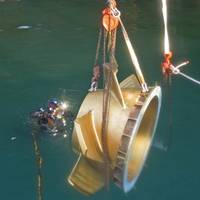
Last month Hydrex installed Propeller Boss Cap Fins (PBCF) on a 289-meter tanker during the vessel’s stop in Mokpo, South Korea. A Propeller Boss Cap Fins (PBCF) can recover energy loss of a propeller hub vortex in the propeller’s backward flow. This decreases fuel consumption by 5% when operating at the same speed, or boosts speed by 2% with the same fuel consumption. A clear explanation of the benefits of installing a PBCF can be found here. By performing the operation on-site and underwater, the tanker’s owner could immediately benefit from the system’s fuel savings.