
HD Hyundai Group’s Next-Gen Autonomous Tech Reaches Certification Milestone
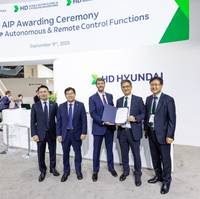
American Bureau of Shipping (ABS) has granted approval in principle (AiP) for VesselWise, a next-generation autonomous technology for optimizing propulsion to improve fuel efficiency and enhance operational stability.The technology was developed by HD Korea Shipbuilding & Offshore Engineering (HD KSOE), HD Hyundai Heavy Industries (HD HHI) and HD Hyundai Marine Solution (HD HMS) for LNG carriers.HD Hyundai Group says VesselWise aims to optimize the performance of critical machinery, including air lubrication systems, wind propulsion technology, generator engines and more.
UK-Korea Workshop Focuses on Regulatory Readiness for Autonomous Shipping
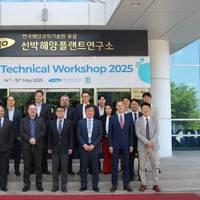
Maritime leaders from the UK and Korea have advanced the regulatory and commercial future of Maritime Autonomous Surface Ships (MASS), following a technical workshop led by Lloyd’s Register (LR), the Korea Research Institute of Ships & Ocean Engineering (KRISO), and the UK’s National Physical Laboratory (NPL). Held at KRISO’s Daejeon headquarters, the workshop brought together 27 experts, including representatives from the British Embassy in Seoul, to accelerate joint strategies…
Charting Key Regulatory Change Across Maritime Law in 2025 and Beyond
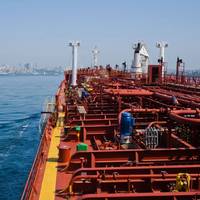
A tidal wave of new regulations is set to hit the global maritime sector this year, representing fresh, highly-complex compliance challenges. From environmental performance to evolving security and safety standards, the shipping industry faces a raft of new rules intended to ensure safe operations and reduce greenhouse gas (GHG) emissions. In this article, Stamatis Fradelos, Vice President of Regulatory Affairs at the American Bureau of Shipping, explains what the flood of new regulations really means…
ABS Approves Framework for Autonomous Navigation Lifecycle Management
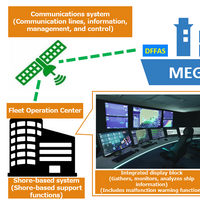
ABS has granted approval in principle to Monohakobi Technology Institute (MTI) for its Action Planning and Execution System (APExS-auto) maritime autonomy framework for the lifecycle management of autonomous navigation systems.The framework is crafted to be flexible, adapting to any necessary operational and design changes.The APExS-auto operational framework was developed by MTI, Nippon Yusen Kabushiki Kaisha and Japan Marine Science Inc. as part of the MEGURI 2040 fully autonomous ship program.The project utilized the System-Theoretic Process Analysis (STPA) method…
DNV Class Notations for Safer Autonomous Shipping

DNV has launched a new family of class notations, Autonomous and Remotely Operated Ships (AROS), providing a framework for how autoremote vessels can achieve equivalent or higher safety compared to conventional vessels.Autonomous shipping, ranging from remote control operation to fully unmanned vessels, marks a major advancement in the maritime industry. These solutions can deliver a wide range of benefits including improved safety, optimised logistics chains, improved cargo capacity due to reductions in crew…
Design: Great Ships and an Argument for the Anti-Autonomous Ship Crew

Another trip around the sun and Greg has asked me once again to talk about “great ships.”As an older engineer I find it much more difficult to judge greatness in ships. It was much easier when I was young.When I was quite young and living near the Dutch rivers, I thought the greatest ships were Rhine barges with cars on them. I am talking about the inland cargo vessels that ran up and down the Rhine and through the rest of the European canal and river systems. As a six-year-old, I found the the Rhine barges with cars were so much cooler than Rhine barges without cars.
DNV, Brinav Team Up for Autonomous Shipping Technologies
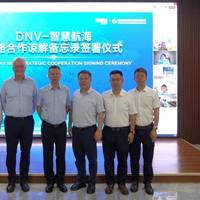
Classification society DNV and Navigation Brilliance (Brinav) have signed a memorandum of understanding (MoU) to collaborate in fast-tracking the development and approval of autonomous and remote-controlled shipping technologies.The signing of the MoU signifies a wider collaboration effort between DNV and Brinav and a strategic step towards realizing the potential of the autonomous technology for maritime industry.Brinav, a specialist in maritime autonomy and green technologies…
AI Can Help Shipping Industry Cut Emissions, Report Says

The global commercial shipping industry could cut down its carbon emissions by 47 million tonnes per year by deploying artificial intelligence for sea navigation, a study by autonomous shipping startup Orca AI showed on Tuesday.The use of the technology could reduce the need for maneuvers and route deviation from close encounters with high-risk marine targets such as vessels, buoys and sea mammals by alerting the crew in real time, according to the report.Shipping, responsible for moving about 90% of global trade, contributes nearly 3% to the world's carbon dioxide emissions.
Simulators Track our Changing Relationship with Technology
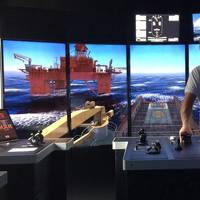
Simulation-based training has its whole-of-ship/whole-of-team scenarios, but zooming in, the industry is now working on more specific targets.We have a close relationship with technology, evidenced by, for example, the phones we are estimated to unlock around 50-80 times a day. It has changed us. Half the people surveyed in a 2022 King’s College London study said that they feel like their attention span is shorter than it used to be. They are wrong, though, if they think that the average attention span of adults today is just eight seconds, one second less than goldfish.
Advanced Digitalization Discussed at Singapore Maritime Week
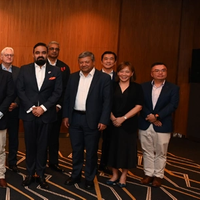
The Maritime International Advisory Panel (IAP) held its third annual meeting on April 16, 2024, during the Singapore Maritime Week 2024. This year, the Maritime IAP held in-depth discussions on the key developments in the maritime sector, including decarbonization, green financing, digitalization and cybersecurity.Established in 2022 by the Ministry of Transport (MOT) and the Maritime and Port Authority of Singapore (MPA), the Maritime IAP aims to seek international perspectives on key long-term trends and developments that will shape the maritime industry.
Simulators Track our Changing Relationship with Technology
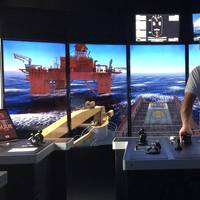
Simulation-based training has its whole-of-ship/whole-of-team scenarios, but zooming in, the industry is now working on more specific targets.We have a close relationship with technology, evidenced by, for example, the phones we are estimated to unlock around 50-80 times a day. It has changed us. Half the people surveyed in a 2022 King’s College London study said that they feel like their attention span is shorter than it used to be. They are wrong, though, if they think that the average attention span of adults today is just eight seconds, one second less than goldfish.
IMO Facilitation Committee to Discuss Autonomous Shipping

The IMO Facilitation Committee will meet in person at IMO Headquarters in London for its 48th session (FAL 48) from April 8 to 12 to discuss issues related to autonomous shipping; prevention of illegal wildlife trafficking on ships; digitalization initiatives and the implementation of the Maritime Single Window and Port Community Systems.The Facilitation Committee (FAL) will continue discussions around regulating commercial vessels that can operate independent of human interaction - Maritime Autonomous Surface Ships (MASS).
Autonomous Shipping Company Massterly Opens Operations Center in Norway
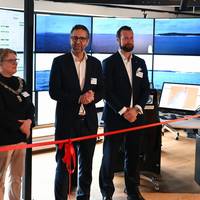
Massterly has opened its new Remote Operation Center (ROC) in Horten, Norway as the company transitions from the testing phase to fully-fledged autonomous vessel operational capabilities."The opening of the ROC is a milestone in Massterly's history and represents a big step forward for autonomous shipping," said Tom Eystø, General Manager of Massterly, a jointly owned venture between Kongsberg Maritime and the Wilhelmsen Group formed in 2018. "With the support of our owners, including our partners ASKO…
ABS' Wiernicki Tells COP28: Safety is a Catalyst for Decarbonization Innovation

“Safety is not merely a box to check but a dynamic force shaping the trajectory of our industry. It acts as both a boundary condition, defining the limits within which we operate, and a catalyst for change, propelling us toward innovative solutions and practices that align with our commitment to a greener future.”That was the message to shipping industry leaders at COP28 from ABS Chairman and CEO Christopher J. Wiernicki.Speaking at the International Chamber of Shipping Shaping the Future of Shipping Summit, he emphasized the pivotal role of safety in delivering a more sustainable industry.
First Marine Vehicle Classed Using ABS Autonomous Guide
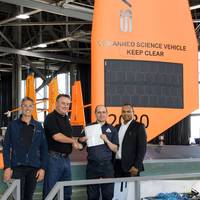
The Saildrone Voyager, a 10-meter commercial uncrewed surface vehicle (USV), is the first autonomous asset built to ABS Class using the ABS Requirements for Autonomous and Remote Control Functions. ABS presented the Class certificate to Saildrone at its headquarters in Alameda, Calif.The Voyager is a marine vehicle developed by Saildrone, a provider of ocean data for climate, mapping and maritime security applications using uncrewed autonomous assets. ABS issued approval in principle (AIP) to the Voyager earlier this year…
Samsung Heavy Industries and DNV in Autonomous Shipping Collaboration
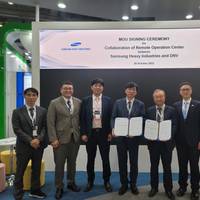
South Korea's Samsung Heavy Industries (SHI) and leading classification society DNV have signed a Memorandum of Understanding (MOU) at Kormarine, committing to establishing SHI's state-of-the-art Remote Operation Centre (ROC) for real-time monitoring and control of Maritime Autonomous Surface Ships (MASS). The MOU will underpin DNV and Samsung Heavy Industries’ collaboration to drive innovation and redefine the future of marine transportation, DNV said.The joint venture seeks to develop a Remote Operation Center (ROC) for MASS…
ClassNK Contributes to Social Implementation of MASS
ClassNK is taking a leading role in the implementation of safe and efficient maritime autonomous surface ships (MASS) through a program of research, rule-development, technology trials and certification.While the regulatory framework covering MASS remains a work in progress, it is clear that autonomous ship technologies are already having a transformative effect on shipping.By autonomously executing certain functions that would typically be performed by crew – especially tasks…
Orca AI to Participate in Second Phase of Autonomous Ship Project
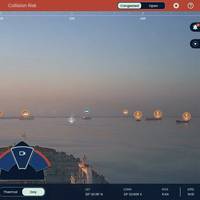
Tel Aviv-based maritime technology company Orca AI is continuing its collaboration with NYK Group subsidiary MTI and partners in the second development stage of the MEGURI2040 project administered by the Nippon Foundation.MTI, alongside sister entity Japan Marine Science Inc, is spearheading the Designing the Future of Fully Autonomous Ships Plus (DFFAS+) consortium comprising 51 Japan-based companies that will work together on the next phase of MEGURI2040.While the OECD projects that maritime trade volumes could triple by 2050, a skilled crew shortage is growing globally.
14th Annual Maritime Risk Symposium to be Held Nov. 14-16 at SUNY Maritime
The 2023 Maritime Risk Symposium (MRS) will be held Nov. 14-16, 2023, as an in-person event, hosted by Maritime College, State University of New York (SUNY) at the Maritime Academic Center. The theme of the 14th annual event is “Managing Impacts of Supply Chain Disruptors, Renewable Energy, Emerging Technology on the Maritime Transportation System (MTS)” with a focus on offshore infrastructure risk and disruptors. Founded in 1874, Maritime College is the oldest maritime college in the United States, providing mariner training for 150 years.
IMO Agrees on Relevance of STCW to Autonomous Shipping
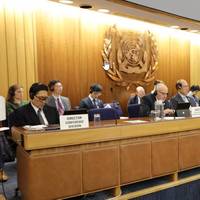
The IMO Maritime Safety Committee (MSC 107) advanced efforts to support maritime autonomous surface ships (MASS) when it met between May 31 and 9 June 9.The Committee made progress on the development of a goal-based instrument regulating the operation of MASS which is expected to be adopted by 2025 after completion of a related regulatory scoping exercise.A MASS Working Group was established to further the work and develop common positions on key matters that will be shared with the Joint MSC/LEG/FAL Working Group on MASS.
Recognizing and Meeting the Challenges of Autonomous Vessels
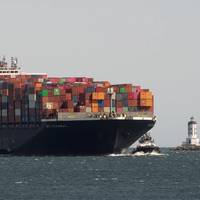
Uncrewed surface vessels (USVs), automated vessels, maritime autonomous surface ships (MASS), remote controlled vessels, and the employment of artificial intelligence and smart marine technology to navigate and operate civilian and military vessels have created a lively debate over utilizing and regulating such technology. Recent articles addressing artificial intelligence (AI) have questioned the value of experience and intuition versus computed logic based upon data and logarithmic differentiations.
SHI Receives Type Approval for Big Data Collection System
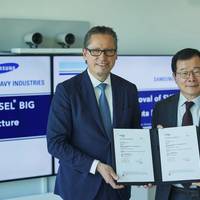
Samsung Heavy Industries (SHI) has become the world's first shipyard to receive DNV's D-INF(S) type approval for its SVESSEL BIG data collection system, a core technology for autonomous shipping.SVESSEL BIG is set to become a crucial component of SHI’s digitally enabled vessels. With D-INF(S) type approval, shipowners can be confident that the onboard critical data infrastructure is verified to meet international standards (ISO 19847/19848) for reliable, safe, and efficient information sharing.DNV Group President & CEO Remi Eriksen presented the type approval certificate to Mr Jin Taek Jung…
Barge Completes Autonomous Navigation Test in Busy Belgian Waterways
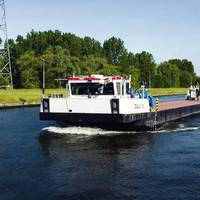
Kongsberg Maritime said Friday it had completed a live trial of autonomous shipping technology in Bornem, Belgium, demonstrating the company's progress in fully autonomous systems.The test vessel, Zulu 4, an inland waterway barge owned by Blue Line Logistics NV, is equipped for remote-operated and autonomous transport demonstrations for the AUTOSHIP project, which is part of Horizon 2020, an EU research program.As part of the test, Zulu 4 maneuvered and navigated on unrestricted waterways, and it demonstrated berthing and unberthing capability.